Tuesday, 5 May 2020

Plasma Feed Market Growth Opportunities by 2025

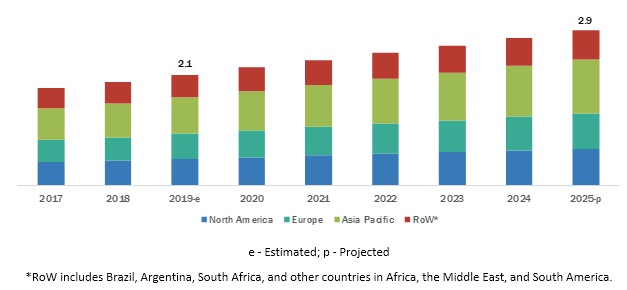
The report Plasma Feed Market by Source (Porcine, Bovine, and Others), Application (Swine Feed, Pet Food, Aquafeed, and Others (Includes Ruminant and Poultry Feed)), Region (North America, Europe, Asia Pacific, and Rest of the World) – Global Forecast to 2025″ The plasma feed market is projected to reach USD 2.9 billion by 2025, from USD 2.1 billion in 2019, at a CAGR of 5.7% during the forecast period. The use of animal-derived plasma proteins as the replacement for antibiotics in feed drives the market for plasma feed.
Based on the source, the porcine segment is projected to be the larger contributor to the plasma feed market during the forecast period

The plasma feed market has been segmented, based on source, into porcine, bovine, and others, which includes sheep, goat, and poultry. The market for porcine plasma feed is projected to record a higher market share between 2019 and 2025. Porcine blood meal offers various health benefits to animals and is used significantly in poultry and porcine feed. For instance, as per the National Center for Biotechnology Information (NCBI), “pigs fed diets containing porcine plasma had greater average daily feed intake (ADFI) and average daily growth (ADG).”


Plasma feed is projected to be used majorly in pet food during the forecast period

The major factor for the higher adoption of plasma feed in pet food is anticipated because the tendency of people to humanize pets and treat them like their family members has resulted in the high demand for better quality pet food. The trend for the use of natural and bioactive products is very prevalent in the pet food industry. This is attributed to factors such as the expansion of the pet population, customer attitudes toward their pets as companions or family. As per Darling Ingredients, one of the major brand engaged in the production of plasma feed products quoted that plasma protein is a natural and sustainable source for pet food. It has several advantages such as water binding capacity, emulsifying properties, and palatability, which in turn drives the market for plasma feed among pet food manufacturers.

The Asia Pacific is projected to dominate the plasma feed market by 2025.

The Asia Pacific accounted for the largest share in the global plasma feed market for in 2018, and the market is projected to grow at the highest CAGR during the forecast period. China is the major reason for the dominance of Asia Pacific in the global plasma feed market, wherein China is one of the largest consumer and producer of overall meat products. China accounted for the highest share in the number of pigs slaughtered in 2017, which makes it the dominant market for porcine-based plasma feed. The Asia Pacific region is projected to be the fastest-growing market for the period considered for this study. The region’s growing concentration of animal slaughtering and increased demand for animal-based food products poses a strong potential for plasma feed manufacturers.

This report includes a study of the development strategies, along with the product portfolios of leading companies such as Darling Ingredients Inc. (US), The Lauridsen Group Inc. (US), SARIA Group (Germany), Sera Scandia (Denmark), Lican Food (Chile), Puretein Agri LLC. (US), Veos Group (Belgium), Kraeber & Co Gmbh (Germany), Rocky Mountain Biologicals (US), Lihme Protein Solutions (Denmark), EcooFeed LLC (US), and FeedWorks (Australia).


Critical questions the report answers:
  • Where will all these developments take the industry in the mid-to-long term?
  • What are the upcoming commercial prospects for the plasma feed market?
  • What is the impact of high capital investment on the plasma feed market?
  • What are the new technologies introduced in the plasma feed market?
  • What are the latest trends in the plasma feed market?

Wednesday, 29 April 2020

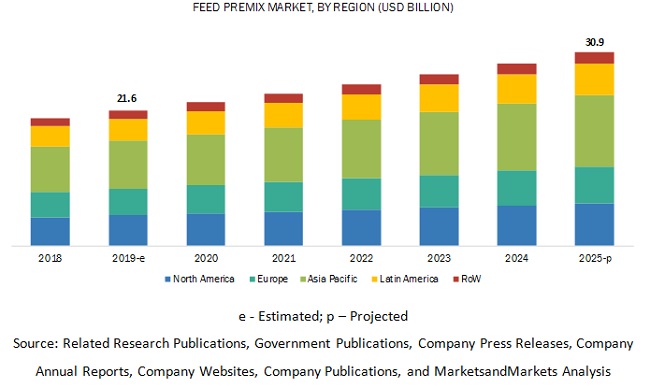
Feed Premix Market Projected to Reach $30.9 Billion by 2025, at a CAGR of 6.2%

The report "Feed Premix Market by Ingredient Type (Vitamins, Minerals, Amino Acids, Antibiotics, Antioxidants, and Others), Livestock (Poultry, Ruminants, Swine, Aquatic Animals, Equine, and Pets), Form (Dry and Liquid), and Region - Global Forecast to 2025", is estimated to be valued at USD 21.6 billion in 2019 and is expected to reach a value of USD 30.9 billion by 2025, growing at a CAGR of 6.2% during the forecast period. Feed premixes consist of necessary growth factors that are added as supplements with concentrate feed to provide a wholesome nutritional diet for animals. Owing to the recent disease outbreaks, ingredients in feed premixes have come under focus to strengthen the immunity of livestock. With advancements in technology and awareness among farmers, the emerging markets are obtaining more localized premix products and services.

Report Objectives:
  • To define, segment, and project the global market size for feed premixes
  • To understand the structure of the feed premixes market by identifying its various subsegments
  • To provide detailed information about the key factors influencing the growth of the market (drivers, restraints, opportunities, and industry-specific challenges)
  • To analyze the micro-markets, concerning individual growth trends, prospects, and their contribution to the total feed premix market
  • To project the size of the market and its submarkets, in terms of value and volume, for the regions (along with their respective key countries)
  • To profile the key players and comprehensively analyze their core competencies
  • To understand the competitive landscape and identify the major growth strategies adopted by the players across key regions
  • To analyze the competitive developments such as expansions & investments, mergers & acquisitions, new product launches, partnerships, joint ventures, and agreements

By ingredient type, the amino acids segment is projected to be the fastest-growing segment in the feed premix market during the forecast period.

The amino acids segment is projected to be the fastest-growing segment in the market. Consumption of amino acid feed premixes has been on the rise globally; Asia- Pacific and Latin America being high-growth markets for amino acids in premixes. Markets such as China and India also benefit from the increasing domestic production of amino acids, especially particularly lysine, as they are available at lower costs.

By livestock, the poultry segment is projected to dominate the feed premix industry during the forecast period.

The poultry segment is projected to hold the largest feed premix market share during the forecast period. Feed premixes such as vitamins, minerals, and amino acids are some of the significant premixes used in poultry feed for better quality and quantity production. On a global level, the total poultry production has been increasing, and with such growth in poultry production and consumption, it has become essential for meat producers to focus more on the quality of meat. This gives a boost to the feed premix industry, to provide a complete nutritional feed for poultry.

Asia Pacific is projected to grow at the highest CAGR during the forecast period

With rapid economic growth in the region, high demand is expected for feed products, especially in China, India, South Korea, and Japan. The contribution of the Asia-Pacific region accounted for the largest share of the global meat production in 2018 according to the FAO, and is projected to grow due to increase in consumption of meat. The main reason for the high consumption of feed premixes in the region is the increased focus to enhance poultry and other livestock meat production.


This report includes a study on the marketing and development strategies, along with a survey of the product portfolios of the leading companies operating in the feed premix market. It includes the profiles of leading companies such as Nutreco N.V. (The Netherlands), Koninklijke DSM (The Netherlands), Cargill (US), ADM (US), and DLG Group (Denmark).

Key questions addressed by the report:
  • Who are some of the key players operating in the feed premix market, and how intense is the competition?
  • What kind of competitors and stakeholders would be interested in this market? What will be their go-to-market strategy, and which emerging market will be of significant interest?
  • How are the current R&D activities and M&A’s in the feed premix market projected to create a disrupting environment in the coming years?
  • What will be the level of impact of new product launches on the revenues of stakeholders due to the benefits offered by the feed premix market, such as increasing revenue, environmental regulatory compliance, and sustainable profits for the suppliers?
  • Which regions are expected to show an increase in feed premix consumption?

Agricultural Adjuvants Market Growth Opportunities by 2026

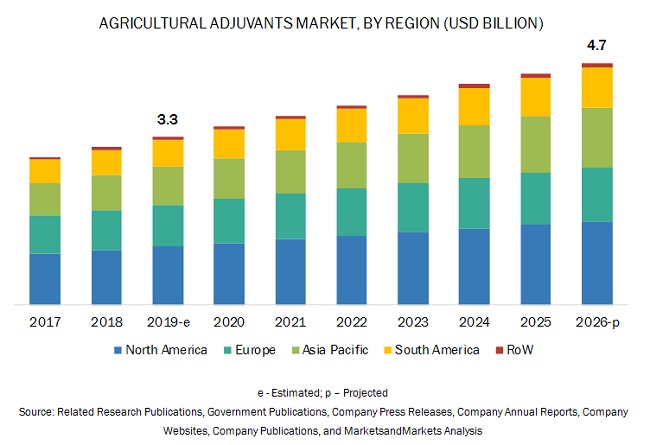
The agricultural adjuvants market is estimated to account for a value of USD 3.3 billion in 2019 and is projected to grow at a CAGR of 5.3% from 2019, to reach a value of USD 4.7 billion by 2026. An increasing need for green adjuvants, improving efficiency and effectiveness of agrochemicals are some of the factors driving the growth of this market. 

Report Objectives:
  • To define, segment, and project the global market size of the agricultural adjuvants market.
  • To understand the agricultural adjuvants market by identifying its various subsegments
  • To provide detailed information about the key factors influencing the growth of the market (drivers, restraints, opportunities, and industry-specific challenges)
  • To analyze the micromarkets with respect to individual growth trends, future prospects, and their contribution to the total market
  • To project the size of the market and its submarkets, in terms of value, with respect to the regions (along with their respective key countries)
  • To profile key players and comprehensively analyze their core competencies
  • To understand the competitive landscape and identify major growth strategies adopted by players across key regions
  • To analyze the competitive developments such as expansions & investments, mergers & acquisitions, new product launches, partnerships, joint ventures, collaborations, divestments, disinvestments, and agreements

Surfactants segment by activator adjuvants is expected to be the most widely used function of agricultural adjuvants market.

Surfactants have been mixed traditionally with pesticides, especially herbicides, to enhance the droplet retention characteristics of pesticides. The market for agricultural surfactants accounted for the largest share of the global agricultural adjuvants market. Also, amongst the products offered by the key players, products offered as non-ionic surfactants are of much higher preference for its compatibility with a broader range of pesticides. Due to these factors, the market is projected to witness significant growth.

The herbicides segment is estimated to witness the fastest growth in the agricultural adjuvants market, in terms of value from 2017 to 2026

Herbicides are used to kill or control unwanted plants. They have largely replaced mechanical methods of weed control in countries where intensive and highly mechanized agriculture is practiced. Adjuvants are the substances which are either added in a herbicide formulation or to the spray tank that helps in modifying the herbicidal activity or application characteristics, such as spray retention and droplet drying, increasing droplet coverage, increasing herbicide cuticle penetration, better mixing and handling, as well as cellular accumulation which reduces the leaching of herbicide through the soil profile, etc. The benefits associated with herbicides are the major factors contributing to the fastest growth of this market, globally.

The increasing demand for improved varieties in crops in the Asia Pacific regions is driving the growth of the agricultural adjuvants market.

Asia Pacific comprises of developing countries with vast agricultural lands; the per capita income of the region depends on agricultural activities. Agricultural technologies are widely accepted and practiced in this region. In Asia Pacific, the total area under agriculture is shrinking due to the high rate of industrialization and urbanization. As a result, farmers opt for practices such as the use of chemical pesticides, which help to increase the yield or productivity of crops. 

 
Key Market Players

Key players in this market include Corteva Inc. (US), Evonik Industries (Germany), and Solvay (Belgium). These major players in this market are focusing on increasing their presence through expansions & investments, mergers & acquisitions, partnerships, joint ventures, and agreements. These companies have a strong presence in North America, Asia Pacific, and Europe. They also have manufacturing facilities along with strong distribution networks across these regions.

Key questions addressed by the report:
  • What are the new application areas for the agricultural adjuvants market that companies are exploring?
  • Who are some of the key players operating in the agricultural adjuvants market and how intense is the competition?
  • What kind of competitors and stakeholders would be interested in this market? What will be their go-to-market strategy, and which emerging market will be of significant interest?
  • How are the current R&D activities and M&A’s in the agricultural adjuvants market projected to create a disrupting environment in the coming years?
  • What will be the level of impact of new product launches on the revenues of stakeholders, due to the benefits offered by agricultural adjuvants market, such as increasing revenue, environmental regulatory compliance, and sustainable profits for the suppliers?

Aquafeed Market to Showcase Continued Growth in the Coming Years

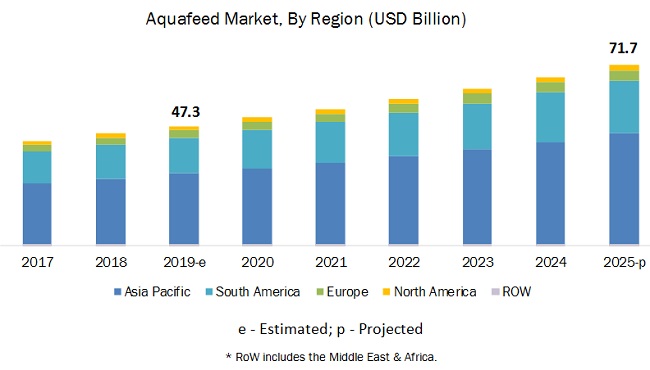
The report "Aquafeed Market by Species (Fish, Crustaceans, and Mollusks), Ingredient (Soybean, Corn, Fishmeal, Fish Oil, and Additives), Lifecycle (Starter Feed, Grower Feed, Finisher Feed, and Brooder Feed), Form, Additive, and Region – Global Forecast to 2025", is projected to reach USD 71.7 billion by 2025; it was estimated at USD 47.3 billion in 2019, recording a CAGR of 7.2% from 2019. One of the major factors driving the aquafeed market is increasing seafood consumption. Also, increasing seafood trade has been driving the growth of this market.

Report Objectives:
  • To describe and forecast the aquafeed market, in terms of ingredient, species, form, additive, lifecycle, and region
  • To describe and forecast the aquafeed market, in terms of value, by region–Asia Pacific, Europe, North America, South America, and the Rest of the World—along with their respective countries
  • To provide detailed information regarding the major factors influencing market growth (drivers, restraints, opportunities, and challenges)
  • To strategically analyze micromarkets with respect to individual growth trends, prospects, and contributions to the overall market
  • To study the complete value chain of aquafeed
  • To analyze opportunities in the market for stakeholders by identifying the high-growth segments of the aquafeed market
  • To strategically profile the key players and comprehensively analyze their market positions, in terms of ranking and core competencies, along with detailing the competitive landscape for market leaders
  • To analyze strategic approaches such as mergers & acquisitions, investments & divestments, expansions, product launches, agreements, collaborations and partnerships in the aquafeed market

The amino acids segment, by additive, is projected to dominate the aquafeed market during the forecast period.

Amino acids are important in animal nutrition and are the building blocks of protein, which play an essential role in the growth, production, and overall maintenance of aquatic animal health. Amino acids provide the energy required for the growth of muscles and bones for muscle movement, digestion, and blood circulation. Owing to these factors, the amino acids segment dominates the aquafeed market, by additive.

On the basis of species, the fish segment is projected to witness higher growth in the aquafeed market.
The aquafeed market, by species, is segmented into fish, crustaceans, mollusks, and others (turtles and sea urchins). Fish farming in ponds, lakes, rivers, and coastal waters is increasing to fill the gap between demand and supply. The increase in fish farming activities and aquaculture has led to the increased demand for fish feed. Among fish, carp and tilapia are high consumers of aquafeed. Also, carps are being extensively reared, owing to their adaptability to changing climates, while Tilapia culturing has increased in recent years due to the growing supply of high-quality protein tilapia species at lower prices.

Request for Customization:
https://www.marketsandmarkets.com/requestCustomizationNew.asp?id=1151

Asia Pacific is projected to account for the largest share in the aquafeed market during the forecast period.
The Asia Pacific market accounted for the largest share in 2019; this market is majorly driven by China and Vietnam, which are major markets for aquafeed. China is among the leading producers of aquafeed in the Asia Pacific region. Due to the significant growth of seafood consumption and trade in this region, the aquafeed market is projected to grow in the region. The processed seafood market in the region is also currently undergoing significant transformation in response to the rapid urbanization and diet diversification. Also, consumer demand for convenience and processed seafood offers profitable growth prospects and diversification to the region’s food sector.

The major vendors in the global aquafeed market are Cargill (US), Archer Daniels Midland Company (US), Alltech (US), Purina Animal Nutrition (US), Nutreco N.V. (Netherlands), and Ridley Corporation Ltd. (Australia).

Monday, 23 September 2019

Agricultural Packaging Market: Drivers, Restraints, Opportunities, and Challenges

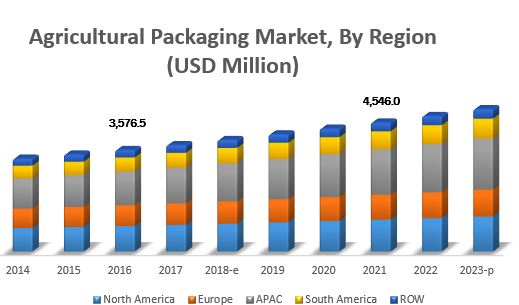
The report "Agricultural Packaging Market by Material (Plastic, Metal, Paper & Paperboard, Composites), Product (Pouches & Bags, Drums, Bottles & Cans), Barrier Strength (Low, Medium, High), Application, and Region - Global Forecast to 2023", The agricultural packaging market is projected to reach USD 5.02 Billion by 2023, from USD 3.93 Billion in 2018, at a CAGR of 5.00% during the forecast period. The market is driven by factors such as rising consumption of pesticides and fertilizers across the globe, increasing adoption of high barrier packaging materials for agrochemicals, increasing demand for extended shelf life of these products, and rising demand for biologicals across the globe owing to the increasing ban on chemical pesticides.

The years considered for the study are as follows:
  • Base year – 2017
  • Estimated year – 2018
  • Projected year – 2023
  • Forecast period – 2018 to 2023
The objectives of the report: 
  • Determining and projecting the size of the agricultural packaging market, with respect to material, product, application, barrier strength, and regional markets, over a five-year period ranging from 2018 to 2023.
  • Identifying attractive opportunities in the market by determining the largest and fastest-growing segments across regions.
  • Analyzing the demand-side factors based on the impact of macro and microeconomic factors on the market and shifts in demand patterns across different subsegments and regions.
Download PDF Brochure: https://www.marketsandmarkets.com/pdfdownloadNew.asp?id=181856573

Rigid plastics segment is estimated to be the most widely used material for agricultural packaging

Plastics are the most preferred packaging material used for pesticides and fertilizers, owing to the properties such as medium-barrier strength, cost-effectiveness, flexibility, and inertness. The packaging of chemical pesticides consumes a large amount of packaging material, when compared to fertilizers as fertilizers are usually packaged in larger volumes while pesticides are available across a wide volume range. Pesticides are majorly prepared in liquid formulation, which is most often packed in plastic bottles, cans, or containers. Rigid plastics such as HDPE are used for manufacturing such packaging solutions. Hence, the rigid plastics segment dominated the market share in plastics.

Medium-barrier strength segment is projected to be the fastest-growing during the forecast period

Medium-barrier strength materials such as plastics and some composites are widely used for packaging purposes across various industries, including agriculture. Their molding and low cost properties in comparison to other materials such as metals are the major reasons for the adoption of these materials by both the manufacturers and end use farmers on a wide scale. Composite materials are increasingly gaining interest among agrochemical manufacturers; however, the share of packaging in the agrochemical value chain is at a higher scale, when compared to plastic packaging. The demand for medium-barrier strength materials is expected to continue its dominance in next few years; hence, the segment is projected to grow at the highest rate during the forecast period.

Speak to Analyst: https://www.marketsandmarkets.com/speaktoanalystNew.asp?id=181856573

Asia Pacific is projected to dominate the market for agricultural packaging at the highest rate through 2023

Asia Pacific is the largest consumer of agricultural packaging owing to the large production capacities of agrochemicals prevailing in China and India, which makes it easier for most private, local companies to launch their products. The high labor power, fragmented packaging industry, and easy availability of packaging materials in Asia Pacific countries have resulted in significantly lower production costs. Additionally, factors such as growth in demand for biologicals, increase in trade opportunities of agrochemicals, and efficient infrastructure are the key competitive advantages for the Asia Pacific market.

The market for agricultural packaging in the Asia Pacific region is projected to grow at the highest CAGR of 6.17% from 2018 to 2023, owing to the increasing expansions of major agrochemical as well as agricultural packaging players in this market and growing demand for biologicals that has opened opportunities for the development of better packaging techniques in this industry.

This report includes a study of marketing and development strategies, along with the product portfolios of leading companies. It also includes the profiles of leading companies such as Amcor Limited (Australia), Bemis Company, Inc. (US), Sonoco Products Company (US), Grief Inc. (US), Mondi Group (South Africa), Packaging Corporation of America (US), NNZ Group (Netherlands), LC Packaging International BV (Netherlands), Silgan Holdings, Inc. (US), ProAmpac LLC (US), Flex-Pack (US), Purity Flexpack Limited (India), ePac Holdings LLC (US), Kenvos Biotech Co., Ltd. (China), and Parakh Group (India).

Growth in Demand for Meat and Meat Products to Drive the Blood Meal Market

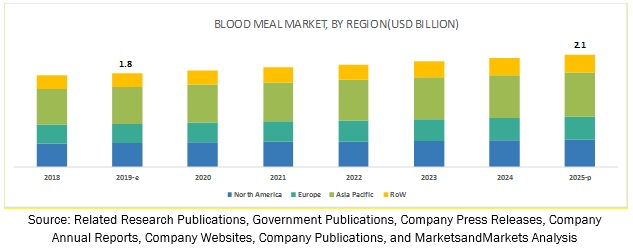
The report "Blood Meal Market by Source (Poultry, Porcine, and Ruminant), Application (Poultry Feed, Porcine Feed, Ruminant Feed, and Aquafeed), Process (Solar Drying, Drum Drying, Ring & Flash Drying, and Spray Drying), and Region - Global Forecast to 2025", The market for blood meal is estimated to be valued at USD 1.8 billion in 2019 and is projected to grow at a CAGR of 3.0% from 2019 to 2025, to reach USD 2.1 billion by 2025. The growing feed industry is one of the major factors driving the growth of the blood meal market, as feed plays a major role in the global food industry. The increasing use of blood meal ensures safe and nutritious feed for animals.


Report Objectives:
  • To define, segment, and project the global market size for blood meal
  • To understand the structure of the blood meal market by identifying its various subsegments
  • To provide detailed information about the key factors influencing the growth of the market (drivers, restraints, opportunities, and industry-specific challenges)
  • To analyze the micromarkets, with respect to, individual growth trends, future prospects, and their contribution to the total blood meal market
  • To project the size of the market and its submarkets, in terms of value and volume, with respect to the regions (along with their respective key countries)
  • To profile key players and comprehensively analyze their core competencies
  • To understand the competitive landscape and identify the major growth strategies adopted by players across key regions
  • To analyze the competitive developments such as expansions & investments, mergers & acquisitions, new product launches, partnerships, joint ventures, and agreements
Download PDF Brochure: https://www.marketsandmarkets.com/pdfdownloadNew.asp?id=84855008

By application, the poultry blood segment is projected to dominate the blood meal market during the forecast period

The blood meal market, on the basis of application, is subsegmented into porcine feed, poultry feed, ruminant feed, and aqua feed. The demand for poultry products remains high in emerging countries of the Asia Pacific, resulting in the slaughter of animals. Thus, a large amount of blood is released from animals, creating opportunities for blood meal manufacturers. In addition, the rise in the consumption of poultry products in this region due to the increased demand for protein-rich foods is projected to drive the blood meal market in the coming years.

By source, the poultry blood segment is projected to dominate the blood meal market during the forecast period.

The poultry blood segment is estimated to account for the largest share in the blood meal market in 2019. Poultry blood is the most preferred raw material, which is used to produce blood meal due to its high amino acid content, particularly Lysine. Majority of the key players such as Boyer Valley (US), Valley Proteins Inc. (US), TerraMar Ingredients LLC (Chile), and FASA Group (Brazil) offer blood meal products that are made up of poultry blood meal.

Speak to Analyst: https://www.marketsandmarkets.com/speaktoanalystNew.asp?id=84855008

The expansion of the feed industry due to the rise in population is projected to drive the blood meal market in Asia Pacific

The Asia Pacific blood meal market is driven by the increase in disposable incomes, rise in urbanization, and expansion of the feed industry. The Asia Pacific region witnesses the presence of major revenue generating countries such as China and Vietnam. These countries witness high consumption of meat products such as pork and are ranked among the largest producers of feed at a global level. These factors are projected to drive the blood mal market in the coming years in the region.

Key Market Players:

Key players identified in this market include Darling Ingredients Inc (US), Terramar (Chile), Valley proteins Inc. (US), West Coast Reduction Ltd. (US), and Allana Group (India). These companies have a strong presence in North America and Europe. They also have manufacturing facilities along with strong distribution networks across these regions.

Wednesday, 17 July 2019

Increase in Demand for Meat Products in Developing Countries Drives the Plasma Feed Market

The report "Plasma Feed Market by Source (Porcine, Bovine, and Others), Application (Swine Feed, Pet Food, Aquafeed, and Others (Includes Ruminant and Poultry Feed)), Region (North America, Europe, Asia Pacific, and Rest of the World) - Global Forecast to 2025" The plasma feed market is projected to reach USD 2.9 billion by 2025, from USD 2.1 billion in 2019, at a CAGR of 5.7% during the forecast period. The use of animal-derived plasma proteins as the replacement for antibiotics in feed drives the market for plasma feed.


Based on the source, the porcine segment is projected to be the larger contributor to the plasma feed market during the forecast period

The plasma feed market has been segmented, based on source, into porcine, bovine, and others, which includes sheep, goat, and poultry. The market for porcine plasma feed is projected to record a higher market share between 2019 and 2025. Porcine blood meal offers various health benefits to animals and is used significantly in poultry and porcine feed. For instance, as per the National Center for Biotechnology Information (NCBI), “pigs fed diets containing porcine plasma had greater average daily feed intake (ADFI) and average daily growth (ADG).”

Plasma feed is projected to be used majorly in pet food during the forecast period

The major factor for the higher adoption of plasma feed in pet food is anticipated because the tendency of people to humanize pets and treat them like their family members has resulted in the high demand for better quality pet food. The trend for the use of natural and bioactive products is very prevalent in the pet food industry. This is attributed to factors such as the expansion of the pet population, customer attitudes toward their pets as companions or family. As per Darling Ingredients, one of the major brand engaged in the production of plasma feed products quoted that plasma protein is a natural and sustainable source for pet food. It has several advantages such as water binding capacity, emulsifying properties, and palatability, which in turn drives the market for plasma feed among pet food manufacturers.


The Asia Pacific is projected to account for the largest market share during the forecast period

The Asia Pacific plasma feed market is projected to be the largest between 2019 and 2025 and is expected to grow at the highest CAGR during the same period. The steadily improving economy has been driving the overall meat food market in the region, which has, in turn, been boosting the plasma feed market as well. According to the Food and Agriculture Organization (FAO), the demand for livestock products has grown in this region in recent years. For instance, meat consumption has grown at a rate of 5 % and for dairy products at a rate of 3.5-4% per year. The increased demand for pork in the region, along with the rise in the consumption of beef in China is expected to increase the number of slaughters, which can eventually improve the market suppply need for plasma feed manufacturers.

Key Market Players:

Key players in plasma feed market include Darling Ingredients Inc. (US), The Lauridsen Group Inc. (US), SARIA Group (Germany), Sera Scandia (Denmark), Lican Food (Chile), Puretein Agri LLC. (US), Veos Group (Belgium), Kraeber & Co Gmbh (Germany), Rocky Mountain Biologicals (US), Lihme Protein Solutions (Denmark), EcooFeed LLC (US), and FeedWorks (Australia).

Recent Developments:
  • In October 2018, Darling Ingredients Inc. acquired assets of Triple - T Foods Arkansas, Inc. (US), including its pet food ingredient operations. The acquisition would help the company to expand its premium protein business for pet food.
  • In June 2018, Essentia Proteins (US), Part of Lauridsen Group (US) acquired Scanflavour (Denmark), which is engaged in the production of functional proteins and ingredients derived from pork. The acquisition would lead to the strengthening of the group’s market presence and strong establishment of its customer base.